01
Air textured yarns
What it is
Continuous multifilament yarns whose filaments are opened, looped and entangled by a turbulent air jet, creating a bulkier spun-yarn-like structure.
Structure / composition
Usually polyester, polyamide or polypropylene multifilaments; the chemistry is that of the base polymer, while structure is modified mechanically rather than chemically.
How it is produced
One or more feed yarns are overfed into a compressed-air texturing jet, where loops and entanglements form; the yarn is then stabilized, wound and, when required, heat-set.
Explore test methods →Application enquiry →
02
Acrylic
What it is
A synthetic textile fibre designed to provide a soft, warm, wool-like handle with good weathering and colour performance.
Structure / composition
Made predominantly from polyacrylonitrile; commercial acrylic fibres normally contain at least 85% acrylonitrile units, with comonomers added to tune dyeability and processing.
How it is produced
Acrylonitrile polymer is dissolved and spun by wet or dry spinning, then washed, drawn, crimped, heat-set and cut to staple or collected as tow.
Explore test methods →Application enquiry →
03
BCF
What it is
Bulked Continuous Filament yarn is a voluminous continuous-filament yarn used especially in carpets and floor coverings.
Structure / composition
Most commonly polypropylene, polyamide 6 or polyester; many fine continuous filaments are combined into one yarn bundle.
How it is produced
Polymer is melt-spun through a spinneret, drawn and then bulked/textured—typically with hot air—before interlacing, heat-setting and winding.
Explore test methods →Application enquiry →
04
Carbon fiber
What it is
A high-performance fibre consisting mainly of carbon atoms arranged in highly oriented graphitic microcrystalline structures, giving very high stiffness and strength at low mass.
Structure / composition
Typically above 90% carbon; most textile-grade carbon fibre is derived from PAN precursor, while pitch-based grades are also used.
How it is produced
A precursor fibre is spun and stretched, oxidatively stabilized, carbonized at high temperature in inert atmosphere and sometimes graphitized; the surface is then treated and sized.
Explore test methods →Application enquiry →
05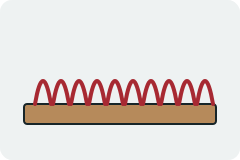
Carpet yarns
What it is
Yarns engineered for tufted, woven or needle-punched floor coverings, where bulk, resilience, abrasion behaviour and appearance retention are critical.
Structure / composition
Common constructions use BCF or staple yarns of polyamide, polypropylene, polyester or wool, often twisted, plied or heat-set.
How it is produced
Fibres are spun or melt-spun, then bulked or staple-spun, twisted/plied as required, heat-set and wound for carpet manufacturing.
Explore test methods →Application enquiry →
06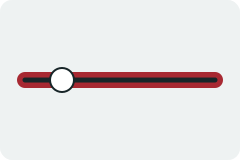
Coated yarns
What it is
Yarns with a continuous or discontinuous functional layer applied around a core yarn to modify friction, conductivity, adhesion, chemical resistance or surface durability.
Structure / composition
A textile or technical-fibre core is combined with a polymeric, metallic, ceramic or other functional coating; formulation depends on the target property.
How it is produced
Coating can be applied by dip, kiss-roll, extrusion, spraying, plating or chemical deposition, followed by drying, curing or sintering as required.
Explore test methods →Application enquiry →
07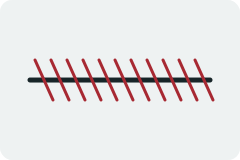
Covered yarns
What it is
Composite yarns in which one yarn forms the core and another filament or yarn is helically wrapped around it.
Structure / composition
Often an elastane core covered with polyamide, polyester, cotton or other yarn; single- and double-covered constructions are common.
How it is produced
The core is fed under controlled draft while one or two covering yarns are wrapped around it at defined spindle speed and turns per metre, then wound.
Explore test methods →Application enquiry →
08
Cotton
What it is
A natural seed fibre from cotton plants, valued for moisture absorption, softness and spinnability.
Structure / composition
Composed mainly of cellulose, with smaller amounts of waxes, pectins, proteins, minerals and natural pigments; mature fibres have a convoluted ribbon-like form.
How it is produced
Cotton bolls are harvested and ginned; fibres are opened, cleaned and carded, optionally combed, then drawn, roved and spun into yarn.
Explore test methods →Application enquiry →
09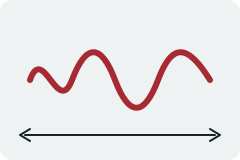
Elastomeric
What it is
Highly extensible fibres or yarns that can recover substantially toward their original length after deformation.
Structure / composition
Usually segmented polyurethane elastane/spandex, although rubber and other elastic polymers are also used; hard and soft polymer segments create strength and elasticity.
How it is produced
Polymer is commonly solution dry-spun or wet-spun, solidified into filaments, finished and wound; elastic yarn may subsequently be covered or combined with other fibres.
Explore test methods →Application enquiry →
10
Fabric
What it is
A planar textile structure made by interlacing, interlooping, bonding or entangling fibres or yarns.
Structure / composition
Composition may be natural, regenerated, synthetic, inorganic or blended; structure can be woven, knitted, nonwoven, braided or composite.
How it is produced
Produced by weaving, knitting, nonwoven web formation and bonding, braiding or related processes, followed by dyeing, finishing, coating or lamination as needed.
Explore test methods →Application enquiry →
11
Film
What it is
A thin continuous polymer sheet used directly or converted into tapes, fibres, membranes and technical textile components.
Structure / composition
Common polymers include polyethylene, polypropylene, polyester, polyamide, fluoropolymers and specialty resins; additives can modify slip, UV stability, colour or barrier properties.
How it is produced
Polymer is melted or dissolved and formed by blown-film, cast-film or solution processes, then cooled/dried, oriented and optionally slit, stretched, coated or laminated.
Explore test methods →Application enquiry →
12
Fluorocarbon
What it is
A family of highly chemical- and temperature-resistant polymer materials containing strong carbon–fluorine bonds.
Structure / composition
Textile forms commonly include PTFE, FEP, PFA, PVDF and related fluoropolymers, each with different melt-processability and mechanical behaviour.
How it is produced
Depending on polymer, fibres are made by melt spinning, paste extrusion followed by stretching, solution methods or film splitting, then heat-treated and finished.
Explore test methods →Application enquiry →
13
Glass fiber
What it is
An inorganic fibre made from glass, offering high tensile strength, dimensional stability, heat resistance and electrical insulation.
Structure / composition
Typically silica-based glass containing oxides such as calcium, aluminium, boron and magnesium; E-glass is common, while S-glass and other formulations serve higher-performance uses.
How it is produced
Raw minerals are melted, the glass is drawn through fine bushings into continuous filaments, rapidly cooled, sized, gathered into strands and then wound, chopped or further processed.
Explore test methods →Application enquiry →
14
Jute
What it is
A natural bast fibre obtained from the stems of Corchorus plants, known for stiffness, biodegradability and relatively high specific strength.
Structure / composition
A lignocellulosic fibre containing mainly cellulose and hemicellulose with significant lignin, pectin, waxes and minor constituents.
How it is produced
Stems are harvested and retted to loosen fibre bundles, then stripped, washed, dried, graded, softened, carded and spun into yarn.
Explore test methods →Application enquiry →
15
Linen
What it is
A textile material made from flax bast fibres, characterized by high strength, low elongation, moisture transport and a crisp handle.
Structure / composition
Primarily cellulose with hemicellulose, pectin, lignin and waxes; fibres occur as long elementary cells bound in bundles within the flax stem.
How it is produced
Flax is harvested, retted, dried, broken and scutched; fibres are hackled and then wet- or dry-spun into linen yarn.
Explore test methods →Application enquiry →
16
Medical textiles
What it is
Textile fibres, yarns, fabrics and engineered structures designed for medical, hygiene, implantable or healthcare applications.
Structure / composition
Materials can include cotton, viscose, polyester, polyamide, polypropylene, polyurethane, PTFE, bioresorbable polymers and specialty fibres; formulation is application-specific and may require biocompatibility.
How it is produced
Manufacturing may involve spinning, weaving, knitting, braiding or nonwoven formation followed by cleaning, coating, sterilization and controlled finishing according to the intended medical use.
Explore test methods →Application enquiry →
17
Microfiber
What it is
Very fine fibres or filaments with a low linear density, enabling soft handle, high surface area and dense lightweight textile structures.
Structure / composition
Commonly polyester and polyamide, including bicomponent island-in-the-sea or splitable constructions; microfibres are generally below about 1 dtex per filament.
How it is produced
Produced by fine-hole melt spinning or bicomponent spinning, followed by drawing and often splitting or dissolving one component to create extremely fine filaments.
Explore test methods →Application enquiry →
18
Monofilament
What it is
A yarn consisting of one single continuous filament rather than a bundle of many filaments.
Structure / composition
Common materials include polyester, polyamide, polypropylene, polyethylene, PET, PEEK and fluoropolymers; diameter and cross-section are selected for the application.
How it is produced
Polymer is extruded through a single-orifice die/spinneret, cooled, drawn to orient the molecules, heat-set and wound; profiles can be round or shaped.
Explore test methods →Application enquiry →
19
Nanofiber
What it is
Fibres with diameters in the nanometre to submicrometre range, giving extremely high specific surface area and small pore structures.
Structure / composition
Can be produced from polymers such as PAN, PVDF, polyurethane, polyamide, PEO and biopolymers, and may incorporate particles or functional additives.
How it is produced
Most commonly formed by electrospinning a polymer solution or melt under a high electric field; alternatives include melt blowing, centrifugal spinning and other nanoscale fibre-forming routes.
Explore test methods →Application enquiry →
20
Nylon
What it is
A family of synthetic polyamide fibres known for toughness, abrasion resistance, flexibility and fatigue performance.
Structure / composition
Common textile grades are PA6 and PA66, whose polymer chains contain repeating amide groups; additives and copolyamides can tailor performance.
How it is produced
Polyamide chips are melted and extruded through spinnerets, quenched into filaments, drawn for molecular orientation, optionally textured or heat-set, and wound.
Explore test methods →Application enquiry →
21
Polyester
What it is
A widely used synthetic fibre combining strength, dimensional stability, low moisture uptake and good processing versatility.
Structure / composition
Most textile polyester is polyethylene terephthalate (PET), formed from ethylene glycol and terephthalic acid or related feedstocks; specialty polyesters also exist.
How it is produced
Polymer melt is extruded through spinnerets, quenched, drawn and wound; filaments may be textured, or fibres cut to staple and spun into yarn.
Explore test methods →Application enquiry →
22
Polypropylene
What it is
A lightweight polyolefin fibre with low density, very low moisture absorption and good chemical resistance.
Structure / composition
Made from isotactic polypropylene, often with pigments, UV stabilizers, antioxidants or other additives compounded into the polymer.
How it is produced
Polypropylene is melt-spun through spinnerets, quenched and drawn; it can be produced as multifilament, monofilament, tape, BCF or staple fibre and then textured or heat-set.
Explore test methods →Application enquiry →
23
POY
What it is
Partially Oriented Yarn is an intermediate continuous-filament yarn with molecular orientation developed during high-speed spinning but not fully drawn to final properties.
Structure / composition
Usually PET polyester, though the concept can apply to other melt-spun polymers; it consists of multiple continuous filaments with controlled residual draw potential.
How it is produced
Polymer is melt-spun and wound at high speed to create partial orientation; POY is subsequently draw-textured or drawn to produce finished filament yarn.
Explore test methods →Application enquiry →
24
PTFE
What it is
Polytetrafluoroethylene is a fluoropolymer valued for exceptional chemical resistance, low friction and high-temperature stability.
Structure / composition
Its repeating unit is –CF2–CF2–, producing a highly fluorinated, chemically inert polymer with very high melt viscosity.
How it is produced
Because conventional melt spinning is difficult, PTFE fibre is commonly made by paste extrusion and stretching/sintering, matrix spinning, or by slitting and fibrillating PTFE film.
Explore test methods →Application enquiry →
25
Spandex
What it is
A highly elastic synthetic fibre, also called elastane, capable of large reversible extension.
Structure / composition
A segmented polyurethane containing flexible soft segments and stronger hard segments; the phase-separated structure provides stretch and recovery.
How it is produced
Most spandex is solution dry-spun: polymer solution is extruded through spinnerets, solvent is evaporated, filaments are combined, finished and wound.
Explore test methods →Application enquiry →
26
Sutures
What it is
Sterile filamentary materials used to approximate or secure tissue, available as monofilament or braided structures and as absorbable or non-absorbable types.
Structure / composition
Materials include polypropylene, polyamide, polyester, PTFE and absorbable polymers such as PGA, PLA-related copolymers or polydioxanone; coatings may control handling and friction.
How it is produced
Polymer is extruded into filaments or fibres, drawn and annealed; multifilament types are braided, then needles may be attached, followed by cleaning, packaging and validated sterilization.
Explore test methods →Application enquiry →
27
Textured yarn
What it is
Continuous-filament yarn whose geometry has been deliberately modified to create crimp, loops, coils or bulk, improving stretch, cover, handle or thermal properties.
Structure / composition
Usually polyester or polyamide multifilaments; the polymer chemistry remains largely unchanged while filament configuration and internal orientation are altered.
How it is produced
Produced by false-twist draw texturing, air-jet texturing, stuffer-box, gear crimping or related methods, often with heat to set the textured form.
Explore test methods →Application enquiry →
28
Tire cord
What it is
High-tenacity reinforcement yarn or fabric engineered to carry loads and stabilize pneumatic tires under cyclic stress and heat.
Structure / composition
Common reinforcements include high-tenacity polyester, polyamide 6/66, rayon, aramid and hybrid constructions; cords are often treated with adhesion systems such as RFL.
How it is produced
High-tenacity yarns are produced and drawn, then twisted and cabled into cords; cords are woven into tire-cord fabric and dipped/heat-treated to develop adhesion and dimensional stability.
Explore test methods →Application enquiry →
29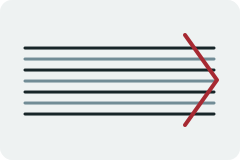
UHMPE
What it is
Ultra-high-molecular-weight polyethylene fibre is an extremely high-strength, low-density fibre with excellent specific tensile properties and chemical resistance.
Structure / composition
Made from polyethylene with exceptionally long molecular chains and very high molecular weight; performance depends on extreme chain orientation and crystallinity.
How it is produced
Typically produced by gel spinning: UHMWPE is dissolved, extruded as gel filaments, cooled and then drawn many times to align the molecular chains before final heat treatment.
Explore test methods →Application enquiry →
30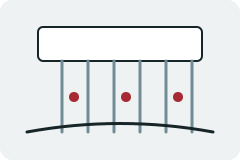
Viscose
What it is
A regenerated cellulose fibre with good moisture absorption, softness and dyeability, made from natural cellulose feedstock.
Structure / composition
Cellulose from wood pulp or cotton linters is chemically converted into soluble cellulose xanthate and dissolved to form viscose spinning solution.
How it is produced
Cellulose is steeped in alkali, aged, reacted with carbon disulfide, dissolved and filtered; the viscose is wet-spun into an acid bath where cellulose is regenerated, then washed, drawn and finished.
Explore test methods →Application enquiry →
31
Wool
What it is
A natural protein fibre obtained mainly from sheep, valued for crimp, resilience, insulation and moisture buffering.
Structure / composition
Composed primarily of keratin proteins with a complex cortex and scale-covered cuticle; disulfide bonds contribute to mechanical and chemical behaviour.
How it is produced
Fleece is shorn, sorted, scoured and carded; fibres are spun by woollen or worsted systems, with combing used for worsted yarns, then twisted and finished.
Explore test methods →Application enquiry →