About Lawson Hemphill
Scientific thinking. Dynamic measurement. International cooperation.
More than 50 years of textile quality assurance
Lawson Hemphill is recognized worldwide as an industry leader in supplying innovative solutions to textile quality assurance. Across the world, the company provides testing equipment and turnkey quality control systems to new and expanding manufacturing facilities, from global groups to specialty producers. For more than fifty years, its focus has been technologically advanced laboratory equipment that helps manufacturers understand yarn behaviour, improve product consistency and make better process decisions. Interactive engineering relationships with manufacturers, technical universities and research institutions connect laboratory development with practical production needs.
Scientific origins and a continuing international story
According to the company history supplied by its current management, Lawson Hemphill was founded by professors from the Massachusetts Institute of Technology (MIT) in the United States. That history reflects an engineering approach in which a useful test must explain material behaviour under defined physical conditions. Management records the acquisition of Lawson Hemphill in 2023 and its relocation to Shanghai as the next chapter of this development. In 2026, Lawson Hemphill GmbH was established in Aachen, Germany. The German company cooperates with the Shanghai team to support instrument selection, application discussions, training, spare parts and service coordination for international customers.

Why dynamic yarn testing matters
A yarn does not remain stationary during processing. It travels through guides, changes direction, contacts machine surfaces and experiences changing tension, temperature and extension. A conventional tensile test provides valuable force–extension information for a specimen; a dynamic test adds insight into the behaviour of continuously moving yarn. For synthetic filament yarns, differences in finish, drawing history, interlacing, texturing and thermal response can affect downstream stability even when nominal yarn count is similar. Lawson Hemphill’s distinctive testing concept combines controlled transport with application-specific measurement modules, allowing these effects to be investigated under repeatable laboratory conditions.
CTT-E: controlled transport as a measurement platform
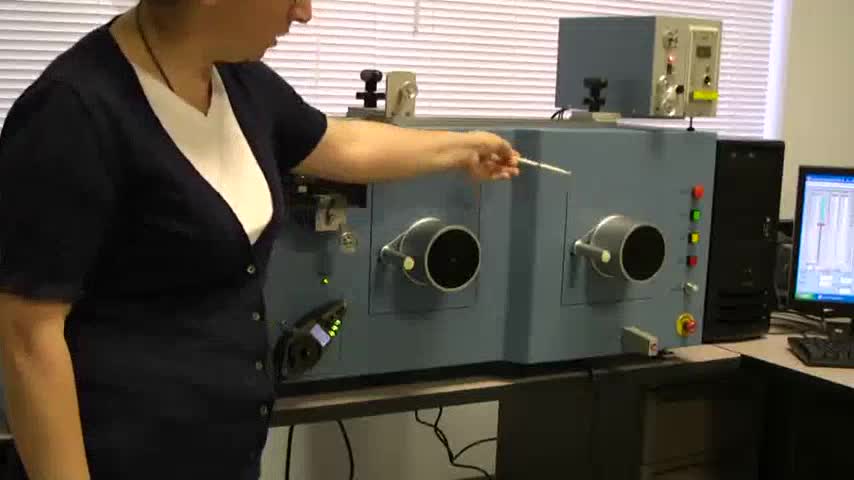
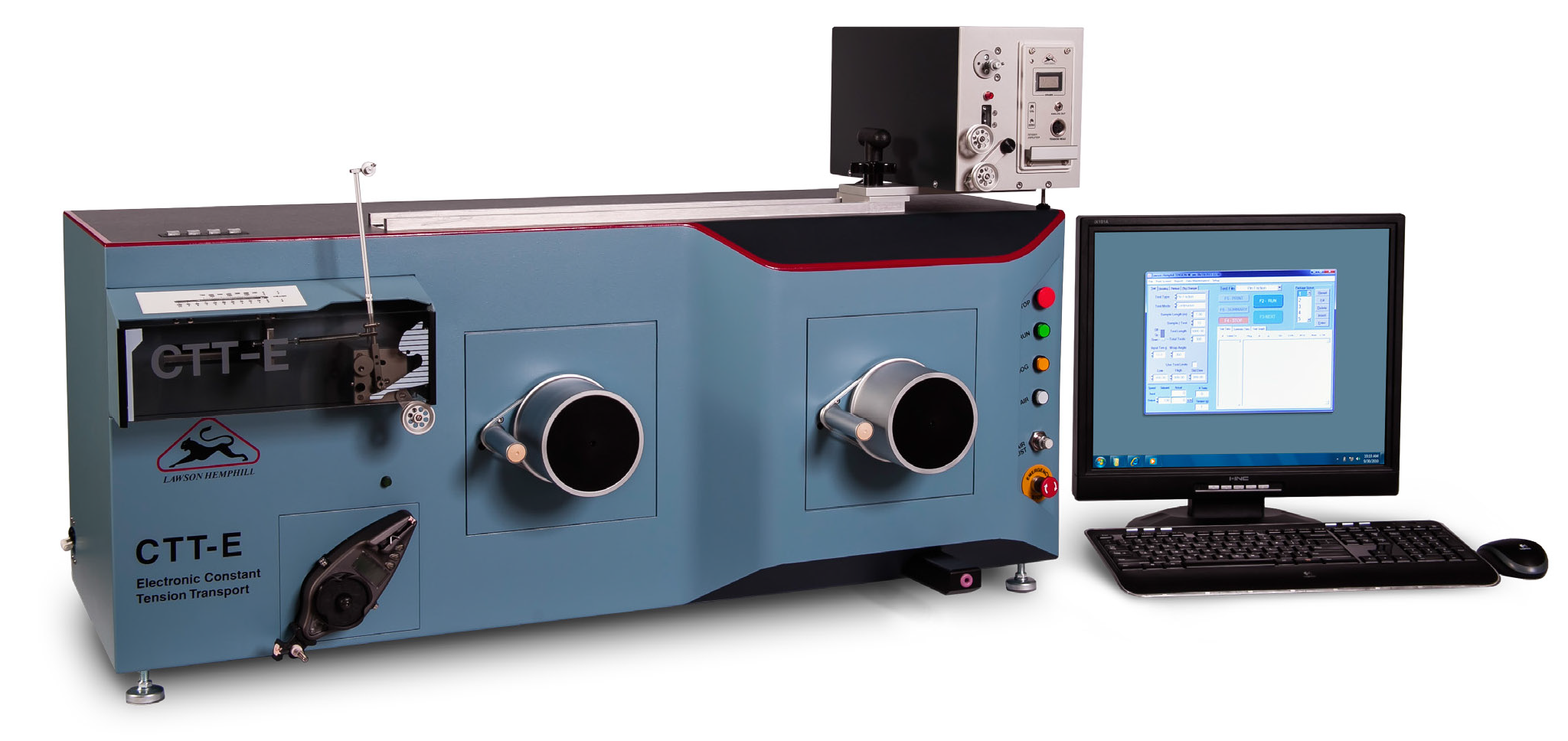
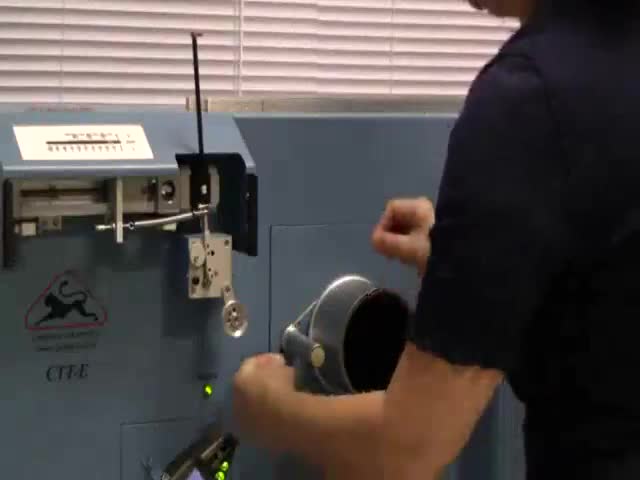
The CTT-E platform uses controlled yarn transport to investigate moving yarn under defined test conditions. In the constant-tension arrangement described in the training literature, the output drive establishes the transport speed while the input control responds to the tension-sensing system. Suitable configurations can investigate dynamic elongation, weak sections, unwinding behaviour and friction. Camera options extend the platform to yarn diameter and appearance, thick and thin places, protruding fibres, broken filaments and textured loops. These measurements answer different questions: an optical diameter variation is not automatically a mass variation, and a dynamic weak-spot result is not interchangeable with a conventional tensile-strength result. Test settings, specimen preparation and the selected module must therefore be recorded with the result.
Synthetic yarns: from POY to textured and elastomeric products
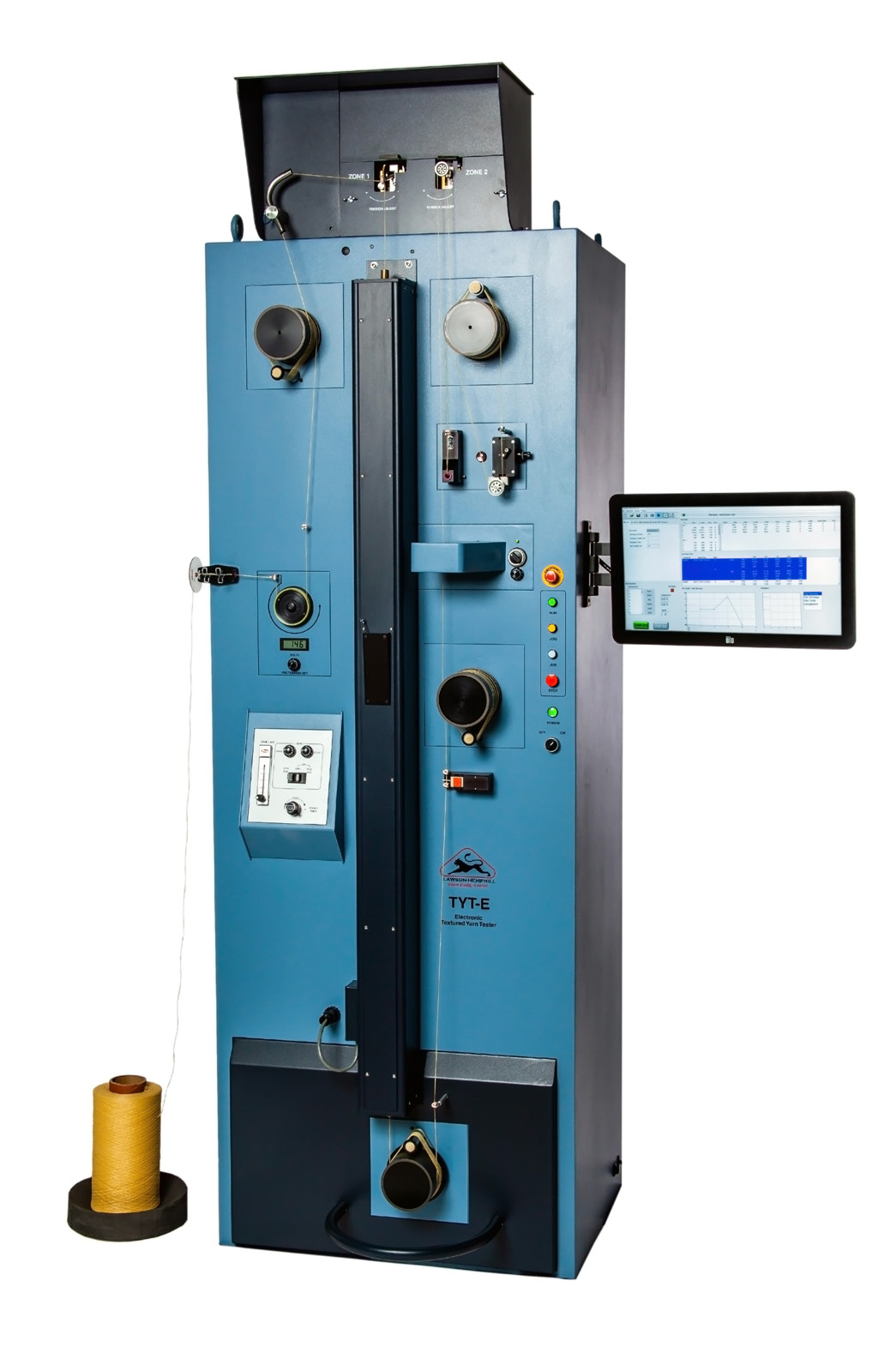
For partially oriented yarn (POY), draw-force measurement examines the force needed to extend yarn at a selected draw ratio and temperature. DFT and DFT-HT configurations support the investigation of drawing consistency; HDK-DFT combines drawing-related information with controlled knitted sample preparation. For textured yarns, the TYT-E addresses dynamic crimp and shrinkage behaviour. For elastomeric yarns, controlled feeding and extension are essential because package withdrawal and relaxation can strongly influence a measurement; the EYF feeding system and appropriate CTT-E configuration address these handling requirements. The FST measures thermally induced shrinkage force, while sonic modulus equipment provides information related to longitudinal stiffness through pulse propagation. Each method complements the others and requires a setup suited to the sample.
Friction, abrasion and interlacing
Yarn-to-solid and yarn-to-yarn friction measurements help characterize contact behaviour under specified tension, speed and geometry. Abrasiveness testing investigates wear caused by yarn against a standard wire; it measures a different phenomenon from friction coefficient. Lint collection examines material released during running tests. Interlacing instruments characterize the distribution and stability of entanglements, which influence filament-bundle cohesion and subsequent processing. Combining these observations can help distinguish surface-finish effects, mechanical damage and variations in yarn structure. Numerical comparisons are meaningful only when the relevant operating conditions and evaluation rules are consistent.
Test methods and standardization
Lawson Hemphill’s technical literature documents equipment for established textile test methods, including yarn-to-solid friction associated with ASTM D3108, yarn-to-yarn friction with ASTM D3412, POY draw-force testing with ASTM D5344, and dynamic textured-yarn crimp and shrinkage testing with ASTM D6774. This connection between instrument design and documented methods is central to reproducible quality assurance for synthetic and technical yarns. It should not be interpreted as a claim that the company alone authored these standards. The applicable edition, instrument configuration and complete procedure must be checked for the intended test. Calibration, conditioning, sample selection and reporting remain essential parts of the measurement system.

From laboratory evidence to production decisions
A useful quality-control programme links the test question to the production process: incoming material qualification, comparison between spinning positions, evaluation of a finish or texturing adjustment, or investigation of a downstream defect. Trends and variability may be as informative as an average value. Lawson Hemphill’s combination of dynamic testing, conventional physical measurements and knitted sample preparation gives laboratories several complementary ways to investigate a problem. Our Aachen team works with customers and Shanghai colleagues to define the application, discuss suitable configurations and plan practical instrument training. The goal is a clear, repeatable measurement that helps customers improve products and remain competitive.
An international industrial network
Selected references supplied by company management from Lawson Hemphill’s project history include DuPont (USA), Trevira (Germany), Barmag / Oerlikon, Trützschler, Toray (Japan), Indorama, Lenzing (Austria), Dralon (Germany) and Montefibre. These historical references illustrate the breadth of the company’s industrial relationships; they do not imply endorsement of this website or a current contract.